
Electrical Panel Upgrade in Southern California: Costs, Signs & Permits (2026)
Explore 2026 Southern California electrical panel upgrade costs, warning signs, permits and timelines. Request a professional panel evaluation from licensed C-10 contractor Sky Electric.
2026-11-02
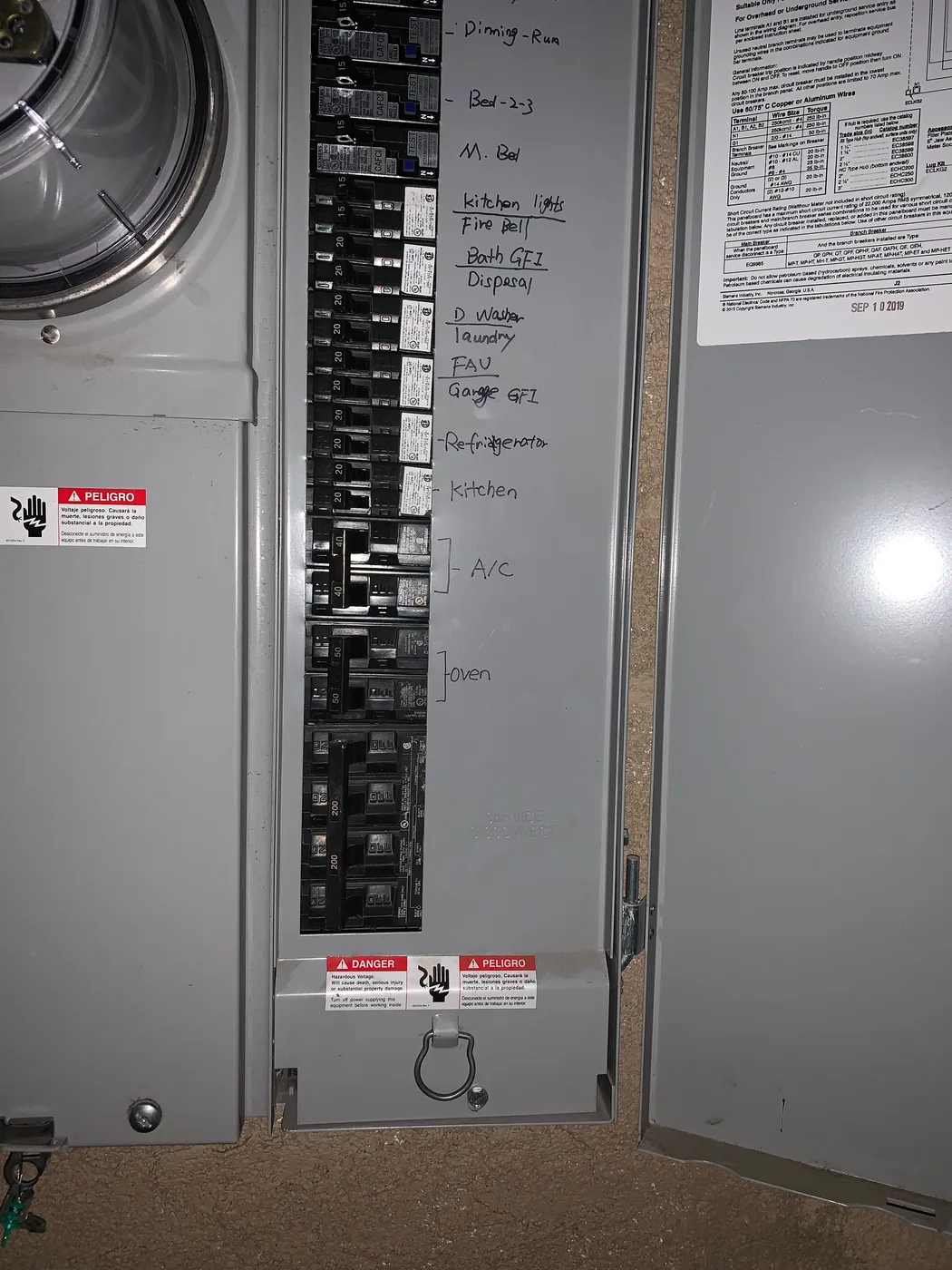
An electrical panel upgrade replaces the breaker box that distributes power through your home, most often swapping an older 60 to 100 amp panel for a modern 200 amp one. Published 2026 ranges from California electricians put a straightforward 200 amp swap at roughly $2,500 to $4,500. The work needs a city permit and inspection, and a standard job takes about one working day.
Most homeowners start looking when breakers keep tripping, when an inspector flags an old Federal Pacific or Zinsco panel, or when they plan to add an EV charger, heat pump or solar. This guide covers how to tell whether your panel needs attention, what drives the price, and what the process looks like, so you can ask any electrician the right questions.
Already know you need one? See our electrical panel upgrade service or contact Sky Electric to schedule an inspection in Rancho Cucamonga, Fullerton or nearby Southern California communities.
7 Signs Your Electrical Panel Needs an Upgrade
Any one of these signs can be a reason to contact a licensed electrician. Some symptoms need urgent attention, but not every symptom means a panel upgrade is necessary; testing identifies whether the problem is with the panel, an individual circuit, or another component.
- Breakers trip or fuses blow repeatedly. A breaker that trips once in a while is doing its job. Repeated tripping may indicate an overloaded circuit, a short circuit, a ground fault, or another issue that needs diagnosis; it does not automatically mean the whole panel needs replacing.
- Lights flicker or dim when a large appliance starts. Dimming when the AC, dryer or microwave starts can have several causes, including a circuit or connection issue. Have an electrician investigate before assuming you need more amperage.
- A burning smell, scorch marks, buzzing or a warm panel. Treat these as urgent. Stop using the affected circuits and call an electrician right away, or request our emergency electrical service. If you notice smoke, flames, or an immediate fire danger, evacuate and call 911. Do not touch a hot or damaged panel.
- The panel is original in an older home. Many Southern California homes built before the 1990s still have a panel sized for far fewer devices than we plug in today.
- No open slots, doubled-up breakers or extension cords everywhere. If every space is full and you rely on power strips, the panel has run out of room for growth.
- You are adding a big load. EV chargers, central AC or heat pumps, an ADU, a kitchen remodel and solar all add demand your current panel may not support.
- Rust, moisture or damage inside the panel, or a fuse box. Corrosion, water marks, pest damage and old screw-in fuses all call for a professional evaluation.
A safety note: leave the panel cover on. Only a licensed electrician should open and inspect the inside of a panel.
Federal Pacific and Zinsco Panels: Why Electricians Recommend Replacing Them
Some older panel brands are worth replacing even if nothing seems wrong. Federal Pacific Electric (FPE) Stab-Lok panels were widely installed from the 1950s into the 1990s, and their breakers can fail to trip when a circuit overloads, which lets wiring overheat. FPE panels were never formally recalled, but most electricians recommend removing them.
Zinsco panels, also sold under the Sylvania and GTE-Sylvania names, were common in 1970s homes. Their documented problems include loose connections between breakers and the bus bar, bus bars that corrode, and breakers that can fuse to the bus bar. The City of Lawndale's electrical panel guidance lists these and other older panel types to watch for.
A label on the panel door or inside the cover usually shows the brand. Look for:
- "Federal Pacific Electric," "FPE" or "Stab-Lok"
- "Zinsco," "Sylvania" or "GTE-Sylvania"
- Challenger or Pushmatic panels, which are also older designs worth having checked
There is a practical side too. Insurers can be reluctant to write or renew a policy on a home with a panel known to be a fire risk, and a documented replacement by a licensed electrician can help when you apply. If you are buying or selling a home in Southern California, ask for the panel brand in the inspection report. Many electricians recommend replacing the whole panel rather than swapping individual breakers.
Why Southern California Homeowners Upgrade Before Adding EVs, Solar or a Heat Pump
A panel upgrade is often the first step of another project, because new equipment adds demand the original panel was never sized for.
- EV charger: a Level 2 charger needs its own 240 volt circuit, and an older panel may not have the capacity or open space for it. See our EV charger installation service.
- Central AC or a heat pump: replacing a small system with a larger one, or adding a second zone, raises the load on the whole service.
- Solar and battery storage: these connect through the panel, so its rating and condition set what your installer can do.
- ADU, addition or kitchen remodel: new living space and electric cooking add circuits and load.
Before recommending a bigger panel, an electrician should run a load calculation that adds up what your home actually draws. In some cases a subpanel that adds breaker space is enough. In others, moving from 100 to 200 amps is the better long-term answer. Either way, the point is to size the system for the next ten years of use, not only today's.
How Much Does an Electrical Panel Upgrade Cost?
A standard 100 to 200 amp panel upgrade in the same location typically runs about $2,500 to $4,500, and added work can push a project well past that. These are broad planning estimates rather than a Sky Electric quote. Costs change with project scope, location and local permit fees, and the ranges below are not independently verified price guarantees. Confirm in writing whether the contractor quote includes the panel, breakers, meter equipment, permits, inspection, utility coordination, repairs and taxes.
- Subpanel (adds breaker space, no full upgrade): $500 to $1,000
- Standard 200 amp panel upgrade, same location: $2,500 to $4,500
- Complex projects (extra rewiring or utility work): $5,000 to $7,000 and up
- Moving the panel to a new location: adds $1,000 to $2,000
- Utility service wire upgrade: $200 to over $1,000
- Underground trenching, when conduit must be replaced: adds $1,500 to $3,500
- Building permit (varies by city): about $150 to $300
- AFCI/GFCI breakers: $40 to $60 each
- Drywall or stucco patching afterward: $300 to $600
What moves the price most: the amperage you choose, where the panel sits, the condition of the existing wiring, whether the utility must upgrade its service wires, and how many protective breakers your circuits require. A quote after an on-site load evaluation is the only reliable number, so ask each electrician to list the permit, materials, breakers and any utility coordination separately.
When comparing bids, check that each one covers the same scope and states who arranges the permit and inspection. A very low quote may exclude essential work. For your specific home, request a load evaluation and a scope-based quote instead of assuming you need a full upgrade.
Permits, Inspections and the 2025 California Electrical Code
Replacing a panel in California requires a building permit and a final inspection, and the work should be done by a licensed electrical contractor. Cities such as Rancho Cucamonga issue permits through their Building and Safety departments and expect a valid California contractor license for the work.
The code also changed this year. The 2025 California Electrical Code took effect on January 1, 2026, and it is based on the 2023 National Electrical Code. Permits applied for on or after that date follow the new edition, and individual cities may add local amendments. Rules on arc-fault and ground-fault protection, grounding and panel location apply to the new panel.
The contractor normally handles the paperwork:
- Pulls the permit from your city's Building and Safety department.
- Coordinates a short power shutoff with your utility, such as Southern California Edison, when the service connection changes.
- Schedules the inspection and fixes anything the inspector flags.
Keep your final permit and inspection record for future buyers, insurers or other property documentation. Local requirements and inspection sequencing vary by city and utility. For guidance, check the California Contractors State License Board license lookup and your city building department before work begins.
What to Expect on Upgrade Day
A standard panel replacement usually takes a two-person crew about four to eight hours, and your power is off for part of that time. Here is the typical sequence:
- Site visit and load calculation. The electrician inspects the panel, checks your wiring and recommends an amperage.
- Quote and permit. You approve the scope and price, and the contractor pulls the permit.
- Power shutoff. The crew turns off the main power and confirms the circuits are de-energized before starting.
- Old panel out. Each circuit is labeled and disconnected, then the old panel is removed.
- New panel in. The crew mounts the new panel, connects the grounding and neutral bars, and reconnects every circuit to its breaker.
- Inspection and power restored. The inspector reviews the work, and power comes back on once it passes.
- Walkthrough. The electrician labels the panel clearly and shows you where the main shutoff is.
Plan for several hours without power, and arrange a backup for anything that cannot go without it, such as a home office, medical equipment or a freezer full of food. If the panel sits in a wall, ask in advance who will patch the drywall or stucco, since electricians do not always include finish repairs.
How to Choose an Electrician for a Panel Upgrade
Verify the contractor before you sign anything. Five checks cover most of the risk:
- Active California license. Look up the license number on the Contractors State License Board website and confirm the classification and status.
- Insurance and bonding. Ask for proof of liability coverage and workers' compensation.
- Permit included. The quote should say the contractor pulls the permit and schedules the inspection.
- Itemized quote. Panel, breakers, permit, utility coordination and cleanup should each appear.
- Local reviews and projects. Look for recent work on homes like yours in your city.
Talk to Sky Electric about your panel
Sky Electric is a licensed, insured and bonded C-10 electrical contractor (California License #1070795) serving homeowners across Southern California, including Rancho Cucamonga, Fullerton and Upland. If your panel is old, crowded or labeled Federal Pacific or Zinsco, we can evaluate it, explain your options and size the upgrade to your real load.
Call (714) 369-7002, or use the panel evaluation request form below. Tell us your city, approximate panel age or amperage (if known), and any plans for an EV charger, HVAC, solar or an ADU. You can also read about our electrical panel upgrades.
Electrical Panel Upgrade FAQ
How long does an electrical panel upgrade take?
Most standard residential upgrades take about one working day, roughly four to eight hours of work. Jobs that involve utility coordination, relocating the panel or trenching take longer, and scheduling the inspection adds time.
Do I need a permit to replace my electrical panel in California?
Yes. California requires a building permit and an inspection for a panel replacement. Your electrician normally pulls the permit and schedules the inspection as part of the job.
Is a 200 amp panel enough if I want an EV charger?
For most single-family homes, a 200 amp service can support a Level 2 EV charger along with typical household loads. An electrician should confirm this with a load calculation, especially if you also have central AC, an electric range or plans for solar.
Can I replace only the breakers in a Federal Pacific panel?
Many electricians recommend replacing the entire panel instead of swapping individual breakers, because the panel itself is part of the concern. Ask for an inspection and a written recommendation.
What is the difference between replacing and upgrading a panel?
A replacement swaps the panel for a new one with the same amperage. An upgrade increases capacity, for example from 100 to 200 amps, and often needs heavier service wiring and coordination with the utility, so it costs more.
Not Sure If You Need a Panel Upgrade? Get a Professional Assessment
Tell Sky Electric about your electrical needs. A professional assessment can evaluate your existing load and planned additions, explain practical options, and identify permit and utility coordination needed for your project.
C-10 License #1070795 · Licensed · Insured · Bonded
Call Now